
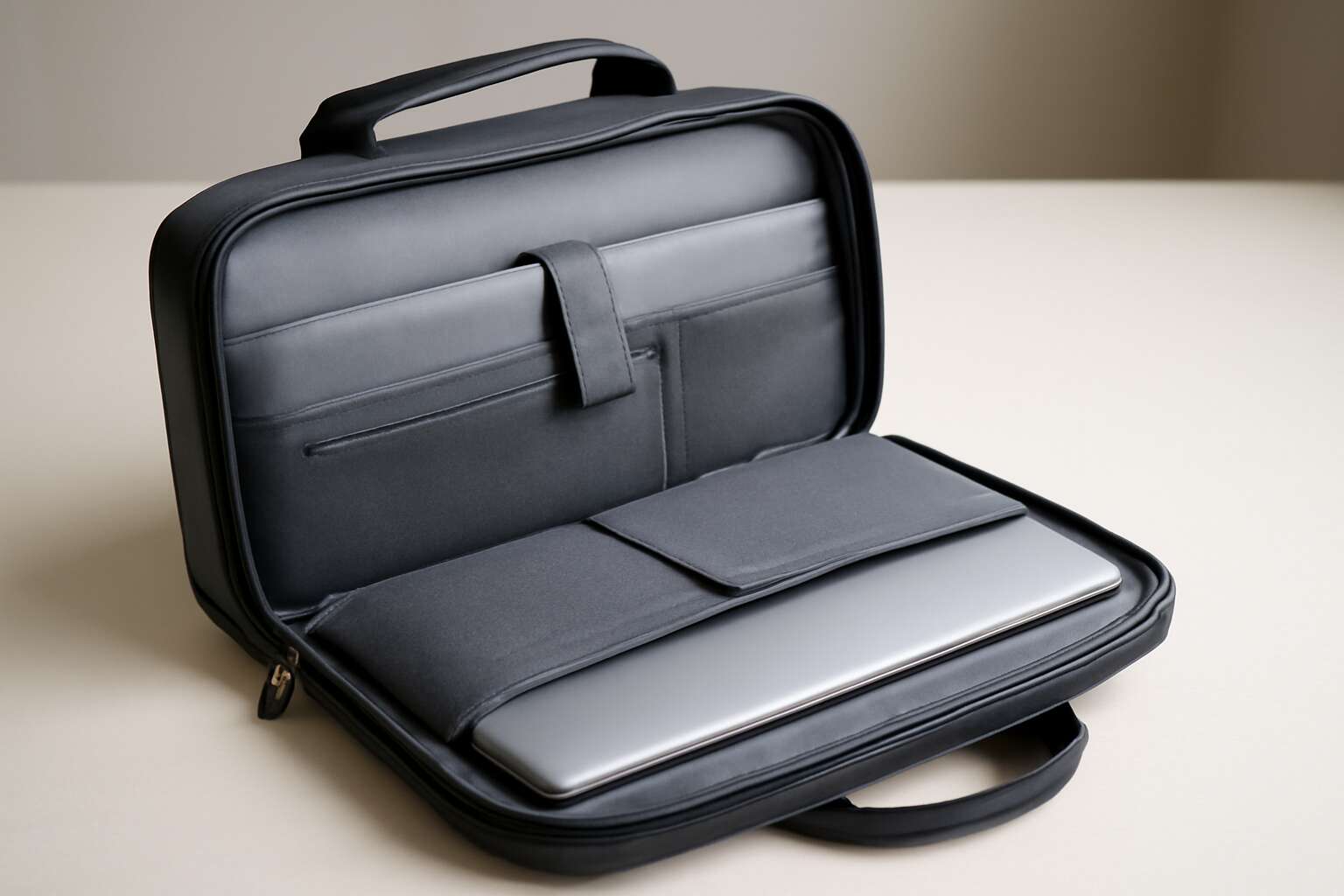
Safety-focused design considerations for laptop bags
Impact protection and padding
On a busy Johannesburg morning, a scratched screen is a petty tragedy we carry in silence. In fact, one in three professionals reports laptop damage tied to bag design alone. When I ask myself, are laptop bags safe, I’m not looking for a gimmick—only trustworthy protection.
Consider these safety-focused design elements that separate mere carriers from protectors:
- Impact-absorbing padding at the base and corners
- Secure, reinforced zippers and closures
- Structured compartments that limit slide and shock
- Durable, weather-resistant outer fabrics
Padding should be more than fluff—it is an architectural decision that absorbs daily jolts from stairs, taxis, and potholes. In environments like SA’s urban sprawl, impact protection translates to fewer dents and longer device lifespans, a moral compact between user and tool.
Secure closures and anti-theft features
In Johannesburg’s morning rush, one in three professionals reports laptop damage tied to bag design alone. When I ask, are laptop bags safe, I’m chasing protection that feels reliable and a touch magical as you navigate stairs and taxis. The right design whispers safety.
Secure closures and anti-theft features are the quiet sentinels that keep trouble out of reach.
- Lockable or reinforced zippers for controlled access
- Hidden pockets and discreet compartments to deter prying hands
- RFID-blocking sleeves to protect sensitive data
- Cut-resistant panels at high-stress edges for added resilience
Together these features shape a bag that feels like armor without sacrificing style, keeping credentials and chargers secure as you move through SA’s urban rhythm.
Ergonomics and weight distribution
City mornings in SA move fast, and a bag should keep pace without slowing you down. Safety begins with how weight sits on the body: thoughtful ergonomics and weight distribution ease the spine, shoulders, and wrists as you commute from taxi ranks to boardrooms.
Key ergonomic design elements include:
- Contoured, adjustable shoulder straps that distribute weight evenly across your torso
- A breathable back panel and padded sleeve that keeps the laptop close to the spine
- Internal compartments that balance weight so heavy items sit low and centered
Beyond the straps, a sturdy top handle and a discreet trolley sleeve help you lift and slide the bag with dignity, reducing twisting that leads to strain. When you ask, are laptop bags safe, you’re really asking how design respects your body in SA’s bustling streets.
Compartments and organization for safe access
The question lingers: are laptop bags safe! In South Africa’s bustling mornings, safety begins in the architecture of the interior—how compartments cradle devices and guide your hand toward what matters most.
Safety-focused design for compartments and organization means each pocket earns its place, a careful balance that respects the body’s shadowed corridors. A padded, low-slung laptop sleeve keeps the device aligned with the spine. Quick-access zones prevent digging and fumbling as you move from taxi rank to boardroom. Thoughtful zoning reduces weight imbalances and the chance of cords tearing loose.
Within this approach, consider these features that enhance safe access:
- Dedicated, cushioned laptop sleeve that sits close to the body
- Legible, labeled compartments for chargers, cables, and documents
- Dual-zip or magnetic closures that prevent accidental openings
These elements fuse function with a quiet, almost ritual elegance as you navigate SA’s urban labyrinth — are laptop bags safe.
Materials and build quality affecting safety
Padding materials and drop protection
“A good bag is a shelter for your tech,” says a Cape Town founder, and the line lands hard. In South Africa’s busy cities, how a bag absorbs shocks matters as much as its style.
Materials and build quality shape safety. The outer shell should shrug off rain and scrapes, while inner padding cushions the laptop from every bump. Look for dense foam cores and linings that cradle the screen without friction. The fit and stitching matter when the bag takes a tumble.
- Dense EVA foam padding for impact absorption
- Closed-cell foam inserts that resist compression
- Molded corners and reinforced seams for structure
People often ask are laptop bags safe, and the answer lies in padding and design that hold shape after rough drops. In South Africa’s daily grind, a bag that preserves the laptop’s snug fit keeps you moving with confidence.
Water resistance and moisture safety
Rain in Cape Town is less a forecast and more a lifestyle choice—”water is the budget breaker for electronics,” says a local designer. A bag that shrugs off drizzle keeps your device safe.
Materials and build quality affect safety when the heavens open. A water-repellent outer shell, sealed seams, and inner moisture barriers keep dampness at bay while the bag still looks sharp in the boardroom. Look for breathability and a rainblock that blocks water from sliding in at shoulder height.
Helpful features include:
- sealed or welded seams
- waterproof zipper or covers
When asked are laptop bags safe, the answer often lies in the balance of aesthetics and hydrophobic engineering—letting you stride through SA’s weather without worrying about a soggy screen.
Durable fabrics and abrasion resistance
Durable fabrics do more than resist wear—they shield your gear through crowded commutes and sudden bumps. Think Cordura, ripstop nylon, and ballistic-style polyester—tough enough to survive a taxi dash or a corridor scrape. The core question are laptop bags safe? is answered by how the fabric matches the rest of the construction.
Beyond the fabric, build quality is the second guard for your device: double-stitched seams, bar-tacks at stress points, and reinforced bases stand up to daily hustle.
- Cordura or heavy-duty nylon outer fabrics
- Double-stitched seams and bar-tacked joints
- Rugged zippers with weather covers
- Reinforced base and sturdy corner guards
Trust in construction, not just looks, to keep screens safe when the city bites.
Non-toxic materials and skin safety
Materials you can’t feel are the danger you can’t see. In South Africa’s buzzing urban maze, safety starts where skin meets fabric. The core question—are laptop bags safe—haunts shoppers and designers alike, shifting as fast as a city wind.
Beyond the stitch, non-toxic materials and skin safety govern every credible choice. Options include low-VOC linings, phthalate-free adhesives, and water-based coatings that curb odors and irritation for long days at the office or on the train.
- Non-toxic, low-VOC linings and foams
- Phthalate-free adhesives and water-based coatings
With a mindful blend of safe materials and solid construction, the bag’s presence becomes a quiet guardian rather than a risk.
Seam and zipper integrity
Materials and build quality matter for safety; robust fabrics, reinforced seams, and quality adhesives prevent micro-tears and water ingress. In South Africa’s urban rush, about 40% of commuters report bag wear at the seams within six months, a reminder that form must meet function. A bag may boast fancy padding yet still fail at its core if the fabric frays at the seam or the zipper pulls off mid-commute. If you’re asking, are laptop bags safe, the answer starts with how they’re made and held together on a crowded platform!
- Stitch density and double-stitched seams
- YKK or other dependable zippers
- Reinforced stress points
- Seam sealing at edges
In South Africa, daily commutes across offices and trains prove craft matters more than flash. The question lingers: are laptop bags safe when the build stands up to rain, dust, and crowded platforms?
Security features and data protection considerations
Dedicated laptop compartments with shock isolation
When you’re sprinting to catch a taxi with a laptop bag in hand, the last thing you want is a data breach on top of a latte disaster. are laptop bags safe? In the SA office climate, security features matter as much as padding, and smart design helps you travel lighter with less risk.
Dedicated laptop compartments with shock isolation keep your device cushioned during bumps. The secret sauce is a suspended sleeve and smart dividers that prevent vibrations from rattling drives.
- Shock-absorbing laptop sleeve
- RFID-blocking pocket
- Lockable or tamper-evident zippers
Data protection considerations extend beyond the device itself. Look for privacy pockets and discreet cable compartments that reduce exposure to curious coworkers or street looters. With those features, you’ll find confidence that are laptop bags safe, even on SA commutes.
RFID protection and data privacy
Cities never sleep, and a SA IT manager once reminded me, “Your bag is a data vessel.” Are laptop bags safe? In practice, safety hinges on design that protects both device and privacy on crowded commutes.
Security features and data protection considerations hinge on RFID protection and data privacy. Look for layers that shield cards and disguise screens with privacy-focused pockets. For cables and devices, discreet compartments reduce exposure in open-plan offices and on trains.
- RFID protection layer
- Privacy pockets
- Discreet cable compartments
With these touches, the path to safe travel feels lighter and more confident across South Africa’s varied commutes.
Lockable zippers and anti-pick mechanisms
Across South Africa’s shadowed platforms, are laptop bags safe? The answer isn’t a slogan but a design creed—bags that guard device, data, and dignity as the city breathes at rush hour. They begin with lockable closures and extend to hidden compartments that thwart wandering hands and wandering eyes. A well-made bag becomes a quiet fortress on a commuter’s day, turning risk into routine amid the glow of screens and the clatter of trains.
Consider the core guardrails designed to deter opportunistic theft:
- Lockable zippers with reinforced sliders
- Anti-pick mechanisms and tamper-evident closures
- Discreet access points that shield screens and cables
In the hush between station announcements and office hum, such features preserve privacy and performance without sacrificing style. When these elements align with a mindful fit, the question itself dissolves into a confident yes.
Hidden pockets and safe storage
City mornings pulse like a data stream, and in South Africa’s commuter corridors, one in three laptops feels the tug of a rogue zipper! Are laptop bags safe? It’s not a punchline but a design creed: protect the device, the data, and the dignity of a worker who wears a bag like armor against the rush hour. The answer lies in intent and build, not bravado.
Hidden pockets and safe storage are the quiet guardians here. I stash my charger in that hidden pocket, and cords, drives, and adapters tuck away from wandering hands while preserving quick access when the timetable gets tight.
- Hidden pocket for cables and small accessories
- Secure sleeve for USB drives and memory cards
- Discrete access for power banks without exposing the screen
With mindful layout, data stays private even when the bag slings across a train seat. It’s not about paranoia; it’s about predictable safety in a city that never sleeps. The bottom line is: are laptop bags safe—it’s a question answered by design.
Travel security design and theft deterrents
are laptop bags safe? The morning rush through South Africa’s Metrorail and taxi ranks makes that question orbit every commuter. One in three laptops feels the tug of a rogue zipper, but safety isn’t bravado—it’s design, built to guard device, data, and dignity as the bag travels the town’s tempo.
Security features and data protection considerations emerge when the bag is in motion. Travel security design deters theft by shaping access so only the rightful user can reach essential gear without exposing screens or cables during hurried moments. The result is a companion that preserves privacy while carrying the day’s work across rails and routes.
Practical usage tips to maximize safety
Choosing the right size and fit for your device
When you slide a laptop into a bag, size becomes safety. If you’ve ever asked, are laptop bags safe, the answer starts with choosing the right size and fit for your device. Measure the length, width, and depth of your gear, then select a bag whose laptop compartment offers a touch more space than your screen. The goal is a confident snugness, not a cramped confession.
To lock in the fit, consider these checks:
- Confirm the laptop slips in with a touch of padding above the keyboard and ports.
- Verify zippers glide without forcing the compartment shut.
- Test the bag with your everyday load and a shoulder strap length that suits your route.
In South Africa’s bustling streets, the right size and fit keeps your work unspilled and on the move.
Maintenance routines to preserve safety features
Are laptop bags safe? In urban travel, safety begins with how you cradle your gear. A confident carry wards off taps and jolts—the first rule of preservation in a coffee-soaked world. The answer lies in mindful handling and the right fit.
Maintenance routines are the silent guardians of safety features. Regular checks keep compartments honest and straps loyal. Clean the fabric and let the bag breathe between rides to stave off mildew, preserving the padding that keeps your device intact.
In South Africa’s bustling streets, the truth about are laptop bags safe arrives through routine care and mindful use. One breath, one journey, and your device travels with you rather than as a shadow behind you.
Safe carrying practices and ergonomics
“Protection is a choice you shoulder on your own,” the city wind seems to murmur. In South Africa’s dawn and streetlit lanes, are laptop bags safe only when the grip is mindful. I tighten the straps as the city wakes, and practical usage tips to maximize safety begin with posture: keep the bag close to the spine, adjust straps snugly, and let the weight settle at the hips rather than the shoulders.
- Adjust straps so the bag rests close to the spine and doesn’t swing with every curb-bump.
- Pack heavier items near the back and within the laptop compartment to keep the center of gravity stable.
Carry with symmetry, glide through crowds, and inspect the bag’s hardware after each ride—zippers aligned, buckles secure, fabric breathing. These small rituals cloak your gear in safety as surely as any feature, turning daily commutes into quiet, guarded journeys along our radiant, rain-slick avenues.
Inspection, warranty, and safety claims verification
They say a bag is a mirror of our habits, and in South Africa’s dawn-lit streets the question lingers: are laptop bags safe? A Cape Town rider quipped, “are laptop bags safe.” The blunt truth is safety is a negotiation with each seam, buckle, and warranty claim that follows a rough commute.
Inspection is a daily ritual. Seek firm stitching, smooth zippers, and fabric that breathes with the device. When evaluating safety claims, verify what the warranty covers and for how long, and resist glossy marketing that outpaces reality. Consider:
- Warranty scope and transferability
- Third-party material certifications
- Clear claim processes and response times
Ultimately, the refrain are laptop bags safe echoes through office corridors, reminding us that safety hinges on credible assurances as much as on the bag itself.



0 Comments